Let's talk about the word healthy.
Specifically, why it might be one of the most useless words we use when it comes to nutrition.
We throw it around constantly. Healthy eating. Healthy choices. Healthy meals. But what do we actually mean when we say it? Because when you start to pull the word apart, it becomes a lot less clear.
Does healthy mean low in calories? High in protein? Minimally processed? Low fat? Low sugar? Low carb? Organic? Locally sourced? All of the above? Because depending on who you ask, you will get a completely different answer.
If a cookie is made with organic flour, raw cane sugar, and fresh farm eggs, is it now a healthy food? Or is it just a less processed version of a cookie? Because contrary to popular belief, swapping in more wholesome ingredients does not meaningfully change how your body processes that cookie or absorbs the nutrients in it.
For most people living in the US right now, a generally healthy diet probably looks like a balance of minimally processed whole foods, adequate protein, and plenty of fiber, while still leaving room for calorie dense, highly palatable foods in reasonable portions. But that definition only applies here, right now, in a country where access to cheap, addictive junk food is easier than ever.
Shift the context entirely and the word falls apart. Think about a population facing severe food scarcity and poverty. In that world, a chocolate chip cookie is not a guilty pleasure. It is survival. And in that context, calling it unhealthy would be absurd.
If the same food can be healthy in one context and not in another, then healthy does not actually mean anything without that context. And this is exactly the problem with using it as a universal label for food. It strips away all context. It ignores the person, the circumstance, the need. And in doing so, it does something even more damaging: it ties eating to morality.
It is very hard to call a food healthy or unhealthy without making a judgment about it. And once we start making judgments about food, we inevitably start making judgments about ourselves for eating it. When you choose the unhealthy thing, you did something bad. And if you did something bad, maybe you are bad. And when shame enters the picture, nothing gets better. Shame only makes it harder to have a grounded, sustainable relationship with food.
The idea that we can sort all food into two clean categories and apply those labels universally was never really accurate to begin with. So maybe instead of asking yourself whether something is healthy, the better question is: is this food the right choice for me, right now, given my current circumstances?
That question actually has a useful answer. It accounts for who you are, what you need, and what is realistic in this moment. It gives you information instead of a verdict.
Food is meant to nourish us. Not confuse us. Not cause judgment, stress, or anxiety. And definitely not to be a test of our character.
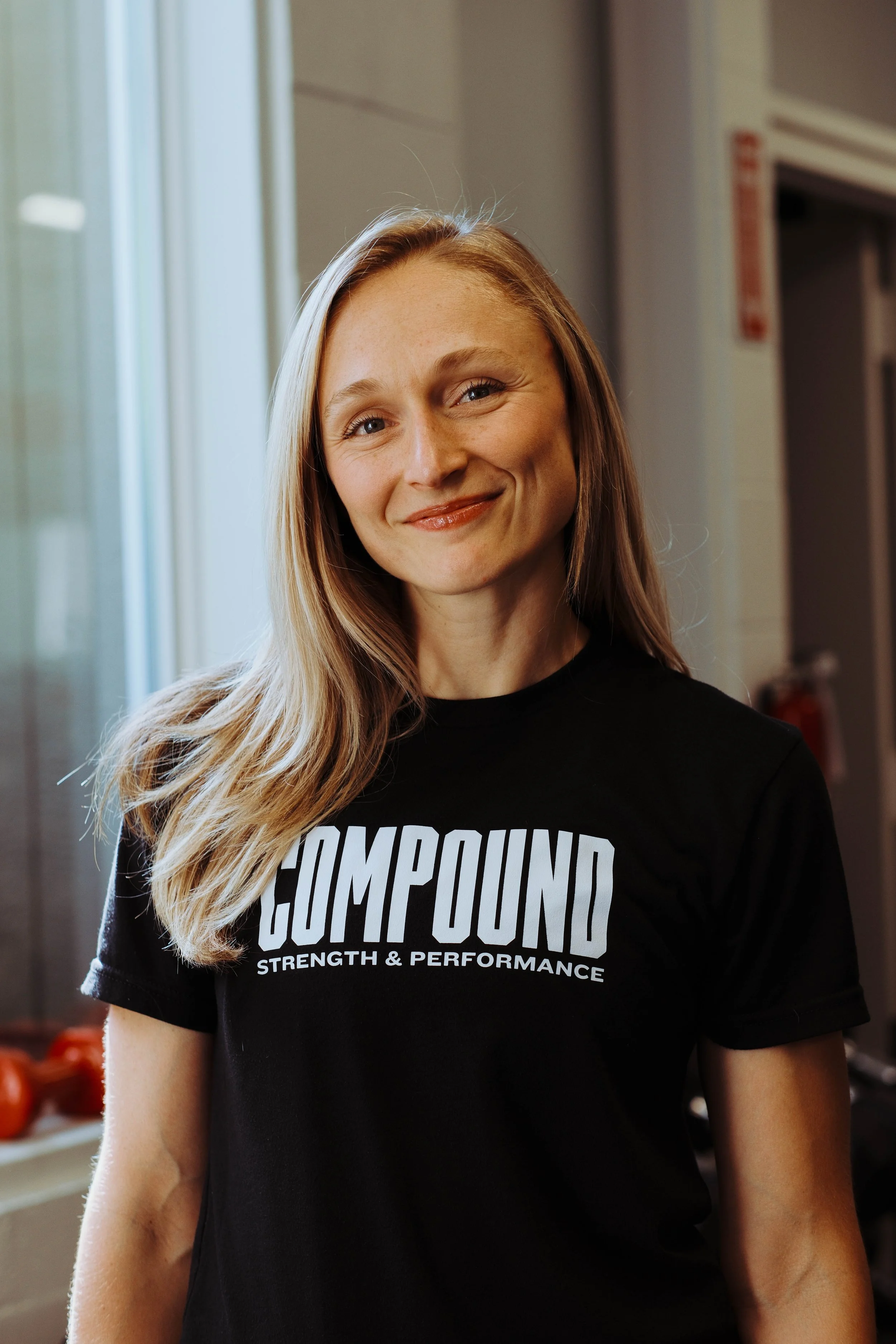
At Compound Strength and Performance in Bellevue, nutrition coaching is about helping you build a relationship with food that is grounded in context and self awareness, not shame and rigid rules. If you are ready to take a different approach, we would love to help. Learn more about working with us here.
— Alaina Anthon, Coach and Co-Founder, Compound Strength and Performance, Bellevue, WA