Dieting feels productive.
You pick a plan. You get motivated. You tighten things up and start seeing progress. And it works, for a while. The scale moves. Your clothes fit differently. You feel like you finally figured it out.
But here is what a lot of people have not fully reckoned with yet: dieting will almost always lead to more dieting.
By definition, a diet is a form of restriction. Whether it is cutting calories, carbs, portions, or entire food groups, the goal is the same. If you expend more energy than you consume, you will lose weight. And that part is true. But dieting comes with an unspoken agreement that nobody puts in the marketing materials: at some point, it ends.
You can call it a break, a cheat meal, or getting back to normal. But eventually the structure loosens and life resumes. And since body composition is a reflection of our average energy balance over time, when we go back to normal, our bodies tend to go back to normal too. That is the part that is never advertised.
Most of us have had this thought mid-diet: this time is different. I am going to get used to eating this way and it will just become how I live now. But if how you eat now relies on constant restriction, white knuckling through hunger, and ignoring what your body is telling you, it is not a lifestyle. It was never going to be sustainable. And maintaining that level of restriction long term is not discipline. It is disordered eating, and it deserves to be named as such.
The cycle looks like this: diet, lose weight, diet ends, regain weight, start another diet. Repeat that enough times and it starts to feel like the only option available. Like the problem is you, your willpower, your consistency, your commitment. But the reason people get stuck in this cycle is not because of any personal failing. It is because the strategy itself was never built to last.
This does not mean that improving your body composition is a bad goal. For many people it would genuinely improve their health, energy, and quality of life in meaningful ways. But constantly moving in and out of diets is not what gets them there. Long term results come from consistently keeping your health at the forefront of your daily life, not from temporary shifts in eating habits that you abandon the moment the motivation fades.
Dieting can give you short term results. But it rarely gives you long term freedom. That comes from building a lifestyle you do not need to escape from.
The habits that actually create lasting change are not extreme or flashy, which is exactly why they work. Sleeping at least seven and a half hours a night, consistently. Drinking enough water, a good starting point being half your bodyweight in ounces each day. Eating enough protein, roughly 0.6 to 0.8 grams per pound of bodyweight. Getting enough fiber, around 14 to 15 grams per 1000 calories. Moving throughout the day with a goal of at least 7500 steps as a baseline. Strength training two to four times per week to build and maintain muscle. Prepping your food environment so that the easy choices are also the good ones. Slowing down when you eat so your body has time to register hunger and fullness. And building your meals around whole foods to create a consistent nutritional foundation.
None of those require a diet. None of them have an end date. And all of them compound over time in ways that no six week plan ever could.
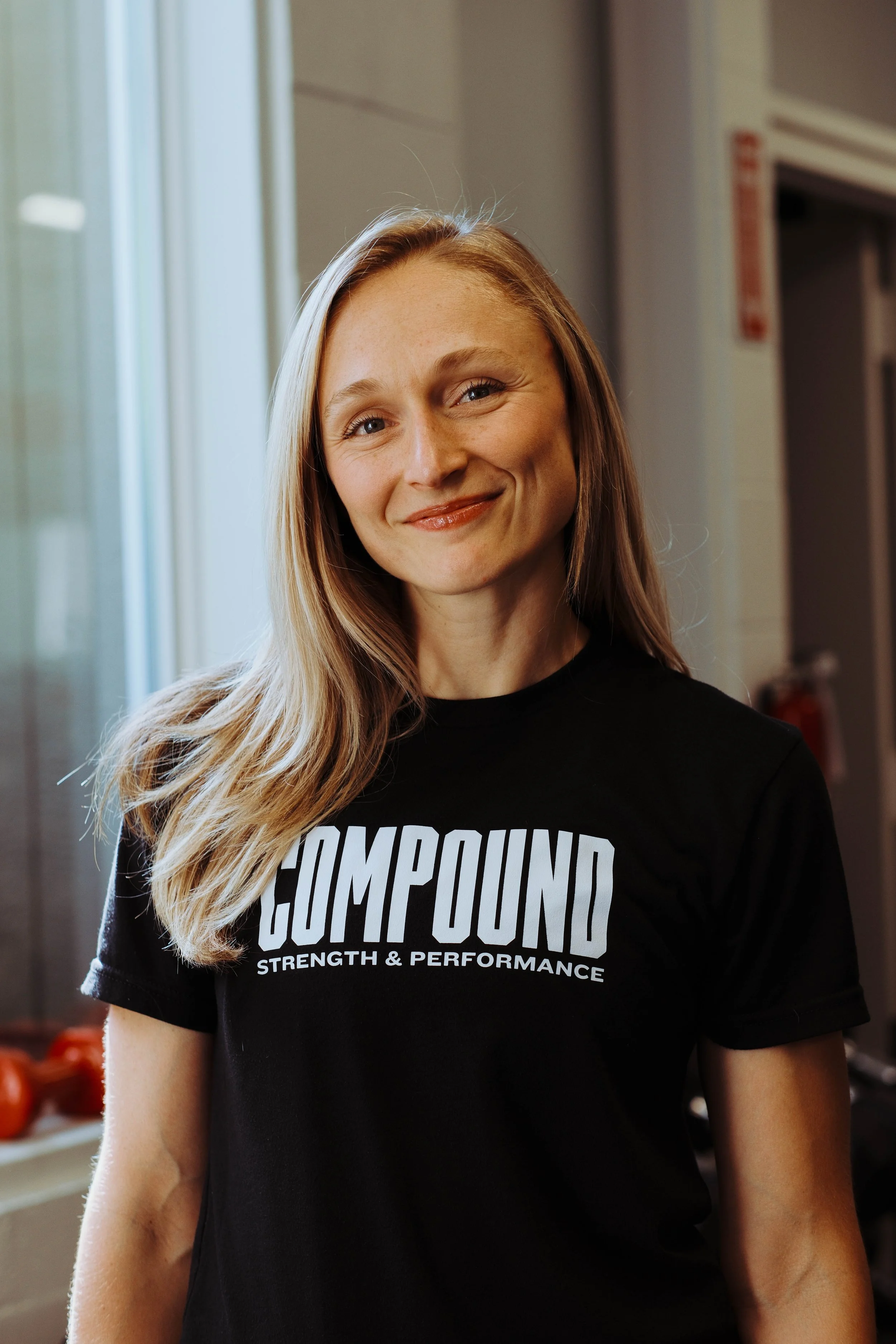
At Compound Strength and Performance in Bellevue, nutrition coaching is about helping you build a lifestyle that supports your goals without requiring you to white knuckle your way through it. If you are ready to stop cycling through diets and start building something that actually lasts, we would love to help. Learn more about working with us here.
— Alaina, Coach and Co-Founder, Compound Strength and Performance, Bellevue, WA